Meal Prep for Weight Loss – What Really Works
 Nahid Reza
· July 27, 2026
Nahid Reza
· July 27, 2026If you’ve been searching for proven meal prep for weight loss methods, you’re already ahead of most people — because most weight loss struggles start not at the gym but in the kitchen, on a Tuesday night when you’re tired and the easiest option is takeout. Meal prep is one of the most consistently supported behavioral strategies in nutrition science, and when done right, it removes the decision fatigue that quietly derails so many well-intentioned eating plans. This guide covers what actually works, what the research says, and how to build a system that fits real life — not just an idealized version of it.
What Exactly Is Meal Prepping — and Why Does It Work for Weight Loss?

Meal prepping means preparing some or all of your meals in advance, typically in one or two dedicated cooking sessions per week. It sounds simple, but the impact runs deeper than just saving time. When food is already cooked, portioned, and ready to eat, you dramatically reduce the number of food decisions you make each day. Research published in the International Journal of Behavioral Nutrition and Physical Activity (2017, n=40,554) found that people who spent more time on home food preparation had significantly better diet quality and were less likely to be obese. That’s not a coincidence — structure reduces impulse.
⭐ #1 Recommended proven meal prep for weight loss methods Supplement
Affiliate link — we may earn a commission at no extra cost to you
The core reason proven meal prep for weight loss methods work is that they shift your eating from reactive to intentional. Instead of deciding what to eat when you’re already hungry — a state where willpower is at its lowest — you’ve already made that decision from a calmer, more rational headspace. Psychologists call this “pre-commitment,” and it’s one of the most reliable tools in behavior change. Pair that with consistent calorie awareness and adequate protein, and you have a framework that nutritionists actually recommend.
It’s also worth noting that meal prep doesn’t require hours of Sunday cooking marathons or professional cooking skills. Even prepping just two or three components — a protein, a grain, and a vegetable — gives you enough flexibility to assemble varied meals throughout the week without feeling like you’re eating the same thing every day.
The Core Benefits You Can Realistically Expect
Let’s be straightforward: meal prep isn’t magic, and it won’t override a diet built on consistently poor food choices. But as a support system for a sound eating strategy, its benefits are well-documented and practical.
- Better calorie control: Portioning food ahead of time makes it far easier to eat appropriate amounts without constant tracking. A 2019 study in Appetite found that pre-portioned meals led to meaningfully lower calorie intake compared to eating from bulk containers.
- Higher diet quality: When you shop intentionally and cook your own food, you naturally include more vegetables, lean proteins, and whole grains — and fewer ultra-processed ingredients.
- Reduced food spend: Buying ingredients in bulk and cooking at home is typically 40–60% cheaper per meal than ordering food or eating out, according to a 2017 analysis in PLOS ONE.
- Lower stress around eating: Knowing your meals are handled is genuinely relieving. That mental clarity can free up energy for other healthy habits — sleep, exercise, hydration.
- Consistency across the week: The weekdays when you’re most pressed for time are exactly when prep pays off most. Monday through Thursday lunch is where most people’s diets fall apart — meal prep solves that almost entirely.
- Supports other strategies: If you’re also exploring approaches like intermittent fasting, having prepped meals makes it far easier to eat within a specific window without scrambling.
How the Science Backs These Strategies

The effectiveness of structured eating preparation is supported by multiple lines of evidence. A landmark study from University College London (2013) found that cooking frequency was inversely associated with caloric intake — people who cooked at home more often consumed fewer calories overall, even without deliberately dieting. The mechanism isn’t purely willpower; it’s environmental design.
Protein is a major piece of why batch-cooking works for weight management. Preparing high-protein foods like chicken breast, hard-boiled eggs, lentils, or Greek yogurt in advance ensures they’re always available. The NIH-published research on dietary protein and satiety consistently shows that higher protein intake reduces appetite hormones like ghrelin and increases satiety signals, making it easier to eat less without feeling deprived.
Glycemic load is another factor. When you prep meals around whole foods — sweet potatoes, brown rice, legumes, and non-starchy vegetables — you naturally stabilize blood sugar across the day. Blood sugar spikes and crashes are a primary driver of cravings, so smoothing that curve through food choice has a direct impact on how hungry you feel between meals. You can read more about natural appetite control strategies that complement this approach.
Fiber intake is similarly easier to manage when meals are prepped. The NIH Office of Dietary Supplements notes that dietary fiber supports satiety and gut health, both of which play a role in body weight regulation. When you’re prepping your own food, hitting 25–35g of fiber per day becomes achievable rather than aspirational.
A Practical Framework: The Five Components of Effective Prep
Most successful meal preppers work around the same five-component system, even if they don’t call it that. Here’s how it breaks down:
1. Proteins — The Anchor of Every Meal
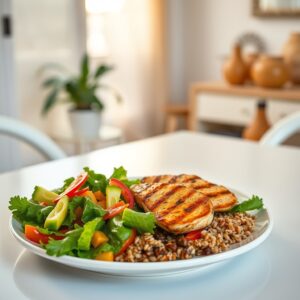
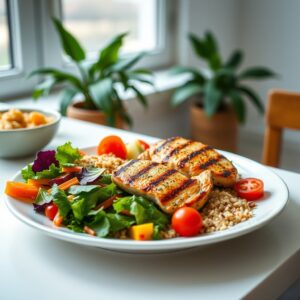
Batch-cook two to three protein sources per week. Rotisserie chicken, baked salmon, hard-boiled eggs, cooked lentils, or ground turkey are all solid options. Aim for at least 25–30g of protein per meal, which aligns with recommendations for preserving lean mass during a calorie deficit. If you want more detail on protein choices, our guide on natural protein for weight loss covers this thoroughly.
2. Complex Carbohydrates — For Energy and Fiber
Cook a large batch of one or two complex carb sources: brown rice, quinoa, farro, or roasted sweet potato. These keep well in the fridge for four to five days and form the base of dozens of meal combinations. Avoid over-relying on white rice or refined pasta — they digest quickly, spike blood sugar, and leave you hungry sooner.
3. Vegetables — Volume and Micronutrients
Roast two sheet pans of mixed vegetables — broccoli, zucchini, bell peppers, cauliflower — at the start of the week. Roasted vegetables hold up far better in the fridge than raw or steamed ones, and they’re versatile enough to go into salads, grain bowls, wraps, or alongside any protein.
4. Sauces and Flavor — Don’t Skip This
This is where most meal prep fails. Plain chicken and brown rice eaten every day becomes unsustainable within a week. Prepare two or three simple sauces — a tahini lemon dressing, a low-sodium teriyaki glaze, a Greek yogurt herb dip — that can transform the same base ingredients into completely different meals. Flavor variety is what turns a two-week habit into a permanent one.
Free download
Get the free 7-Day Reset
Five small daily habits, one printable checklist. No spam, unsubscribe any time.
5. Portioning — The Calorie Awareness Step
Use containers with compartments or a food scale for the first few weeks until you develop an intuitive sense of portion sizes. Research consistently shows that people underestimate calorie content by 20–40% when eating without portion guidance. This doesn’t mean obsessive tracking — just enough awareness to avoid systematically overeating in well-intentioned meals.
Comparing Meal Prep to Other Popular Approaches

It’s worth positioning meal prep honestly against other weight loss strategies people often consider alongside it.
Versus calorie tracking apps: Tracking apps work well for awareness but require consistent daily effort and can become exhausting over time. Meal prep, once the week’s cooking is done, requires very little daily decision-making. Many people find that combining simplified tracking with prep gives the best results without the burnout.
Versus elimination diets: Keto, paleo, and other elimination-style plans can produce results, but their success largely depends on how well you execute them consistently. Meal prep is a format, not a diet — it works within any dietary framework. If you’re considering a restrictive approach, read our overview of keto diet facts versus myths before committing.
Versus relying on “healthy” restaurant options: Restaurant meals labeled as healthy are often higher in sodium, fat, and calories than they appear. A 2013 study in the JAMA Internal Medicine found that restaurant meals underestimated calorie content by an average of 18%. Cooking your own food removes this uncertainty entirely.
Honest Pros and Cons
| Pros | Cons |
|---|---|
| Reduces daily decision fatigue around food | Initial time investment (2–4 hours on prep day) can feel significant |
| Supports consistent calorie and macronutrient targets | Repetitive meals can lead to “food fatigue” if variety isn’t intentional |
| Saves money compared to eating out regularly | Requires upfront planning, grocery shopping, and storage containers |
| Improves overall diet quality through whole food cooking | Some foods (fish, certain vegetables) don’t hold up well after 3–4 days |
| Works with virtually any dietary approach or restriction | Can feel rigid in social situations or when plans change unexpectedly |
| Backed by multiple peer-reviewed behavioral studies | Results still depend on the quality of food choices made during prep |
How to Choose the Right Prep Style for Your Life

Not everyone’s schedule, kitchen, or household looks the same — and the best prep system is the one you’ll actually sustain. Here are a few honest questions to guide your approach:
- How many hours can you realistically spend cooking once a week? If the answer is one to two hours, focus on component prep (proteins, grains, veg separately) rather than full assembled meals. It’s faster and more flexible.
- Do you eat alone or feed a family? Families need more volume, different portion sizes, and meals that can be adapted for different preferences. Prepping base ingredients and letting people customize their plates works well here.
- What’s your refrigerator and container situation? You need at least 8–10 good airtight containers. Glass containers last longer, preserve taste better, and don’t absorb odors. This is a worthwhile one-time investment.
- Are you also thinking about metabolism support? Meal prep pairs well with understanding how your body’s calorie-burning changes over time — particularly relevant if you’re over 40. Our article on metabolism after 40 covers what the research actually shows.
- What are your biggest failure points? If lunch is where you always cave, prep lunches only. If late-night snacking is the issue, prep healthy snack options. Target your actual weak spots rather than trying to overhaul everything at once.
The Healthline guide on how to meal prep also offers practical beginner tips worth reviewing if you’re just starting out.
Our Final Take
After reviewing the evidence and the practical reality of how people actually eat, we’re confident that proven meal prep for weight loss methods represent one of the highest-leverage habits you can build — not because they’re glamorous, but because they consistently solve the real problem: the gap between knowing what to eat and actually eating it.
The research is solid. The behavioral logic is sound. And unlike many weight loss tactics that require constant daily effort, a good prep session pays dividends for the entire week. The key is starting small, building the habit before trying to optimize it, and making sure your food actually tastes good enough to eat again the next day.
Meal prep won’t fix every aspect of weight management on its own — sleep, stress, physical activity, and underlying metabolic health all matter too. But as a foundational habit, few things come close to its consistency and practicality. If you’ve tried and struggled before, the answer usually isn’t more willpower — it’s a better system. This is that system.
Frequently Asked Questions
How many days ahead should I prep my meals?
Most foods stay fresh and safe for three to four days when properly stored in airtight containers in the refrigerator. A practical approach is to prep on Sunday for Monday through Wednesday, then do a smaller mid-week prep on Wednesday evening for Thursday and Friday. Fish and seafood are best eaten within two days.
Will meal prepping get boring after a few weeks?
It can, if you cook the same complete meals every week. The fix is to prep components rather than identical dishes — cook the same chicken and quinoa, but vary the sauces, spices, and vegetable combinations to create different meals from the same base. Having three or four sauce options changes the experience entirely.
Do I need to count calories if I’m meal prepping?
Not necessarily, but some awareness of portions matters — especially in the early weeks. Studies show that people routinely underestimate portion sizes and calorie content by 20–40%. Using a food scale briefly at the start helps calibrate your intuition, even if you stop tracking formally after a month or two.
Is meal prep worth it if my schedule is unpredictable?
Yes, arguably more so. An unpredictable schedule is exactly when having ready food in the fridge protects you from defaulting to fast food or skipping meals. Even prepping just one or two meals ahead — rather than a full week — provides a meaningful buffer against impulsive eating on chaotic days.
Individual results vary based on many factors including diet quality, activity level, sleep, and overall health. The information in this article is for educational purposes only and does not constitute medical advice. Please consult a qualified healthcare provider before making significant changes to your diet or starting a new health program.


Free download
Get the free 7-Day Reset
Five small daily habits, one printable checklist. No spam, unsubscribe any time.